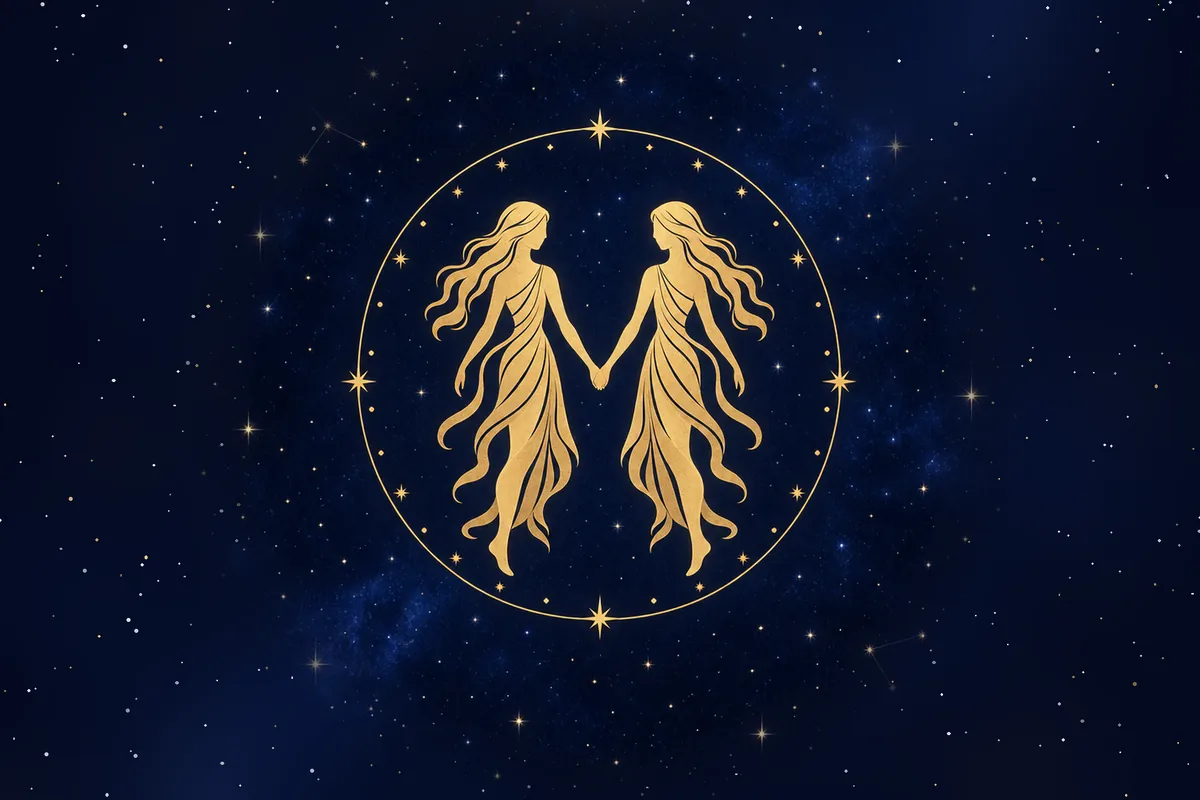
Gemini is the third sign of the zodiac. In Western astrology it covers people born from about May 21 to June 20, though the start and end dates can move by a day in some years. In 2026, for example, the Sun entered Gemini on the evening of May 20 in US Eastern time and left it with the June solstice on June 21. Astrologers describe Gemini as a curious, talkative, quick-minded air sign ruled by Mercury. Most people read it as a tradition for reflection and fun, not as science.
Gemini at a Glance
The basic facts below are the ones astrologers use. The dates come from the tropical zodiac used in Western astrology.
| Attribute | Gemini |
|---|---|
| Usual dates | About May 21 to June 20 (some sources give June 21) |
| 2026 dates | May 20, 8:36 p.m. EDT, to June 21, about 4:24 a.m. EDT |
| Symbol | The Twins (♊) |
| Element | Air (shared with Libra and Aquarius) |
| Modality | Mutable (shared with Virgo, Sagittarius and Pisces) |
| Ruling planet | Mercury |
| Opposite sign | Sagittarius |
| Body areas in tradition | Arms, shoulders, hands, lungs, nervous system |
| Mythology | Castor and Pollux, the Dioscuri of Greek and Roman myth |
The dates move because the calendar year and the Sun’s yearly cycle do not line up exactly. In Western astrology the Gemini season always ends at the June solstice, which usually falls on June 20, 21 or 22. Vedic (sidereal) astrology uses a different zodiac. Under that system the Sun entered Gemini on June 15 in 2026.
The constellation also follows a different schedule from the sign. Going by the constellation boundaries set by the International Astronomical Union in the 1930s, the Sun actually passes in front of the stars of Gemini from about June 21 to July 20. The constellation’s two brightest stars are named after the twins. Pollux is the brighter of the two, an orange giant about 33.7 light-years away. Castor is second brightest, even though it carries the “Alpha” label.
About the Gemini Sign
Traditional astrology describes Gemini, the sign of the Twins, as dual-natured, elusive, complex and contradictory. At its best that duality shows up as versatility. At its worst, older texts call it two-faced or flighty. The sign is linked with Mercury, which astrologers have long tied to childhood and youth. So Gemini is said to carry the charms and the faults of the young. When a Gemini is good, they are very attractive. When they are bad, the charm makes it worse.
In this classic picture, Geminis are lively and happy like children when life suits them. They can also be self-centered, imaginative and restless. They start new activities with enthusiasm but lose interest, always looking for something new. They move from project to project like a butterfly moving from flower to flower. Life, in this description, is a game that needs fresh moves and constant entertainment, free of drudgery and routine. Changing course halfway through is another trait the tradition gives the sign, so making a decision and sticking to it is said to be hard for Gemini.
Character: Gemini’s Light and Shadow Sides
Older astrology writing is blunt about Gemini’s shadow side. It says Geminis lack conscientiousness and often lose the struggle to behave well. Their good qualities come easily: they are affectionate, courteous, kind, generous, and thoughtful toward people who are poor or suffering. The catch, in this account, is that the kindness lasts only as long as it doesn’t disrupt their own life and comfort.
The same tradition says Geminis learn early to use their charm to get what they want. When pushed, they may lie, dodge, or shift blame onto other people, all wrapped in charm. In better moments they try to be honest and direct. If things go against them, they may sulk like children. They are said to want attention, admiration and other people’s time, energy and money, and to protest when they don’t get it.
The chameleon is a common comparison: Gemini reflects every change around it. Under strain, the traditional Gemini can turn pessimistic, sullen, irritable and self-absorbed. Under real hardship, the sign’s willpower is said to fade. A Gemini may withdraw or become a nervous worrier. The other side is adaptability. The same versatility lets Gemini adjust to almost any situation and handle it with ingenuity and cleverness.
These are archetypes from astrological tradition, not findings about real people. In a well-known double-blind test published in Nature in 1985, physicist Shawn Carlson found that astrologers could not match birth charts to personality test results better than chance. Critics have since argued about how the study was designed. The traits are best read as a mirror for self-reflection, not a verdict on anyone born in late May or June.
Mind and Intelligence
Astrologers usually describe Sun-sign Geminis as having a quick, intuitive and sometimes brilliant mind that loves mental challenges. Their concentration can be intense for a while, but it doesn’t last. From childhood they are hungry for knowledge, though they dislike the hard work of studying. They pick up almost anything that takes intelligence and mental agility, and they often combine that with skilled hands.
The Gemini mind is described as strongly analytical. It can see both sides of a question so clearly that the person wavers and struggles to decide. Used well, that same intelligence can pull the sign’s two sides together into one efficient whole. Faced with a hard problem, the traditional Gemini doesn’t grind away at it alone and would rather pick other people’s brains. The risk, in study as in the rest of life, is becoming a dabbler, spread across too many projects and finishing few.
Gemini in Love
In love, traditional astrology calls Gemini fickle. This is not deliberate. It comes from an emotional nature that is said to be changeable at its core. One side of Gemini can fall deeply for someone. Another side dislikes sentimentality and stands back from romance, laughing at it, the people in it and itself, while picking it apart in its head.
Older texts say Geminis take little seriously. Their feelings can run deep, but the intensity fades once the novelty wears off. They can come across as light-hearted, cool and flirtatious, and slow to see the hurt they cause. They enjoy the chase and may lose interest once it ends. In lighter settings they are witty, fun company, more good acquaintances than close friends. Even at their worst they are rarely dull, and they can be excellent talkers. The tradition adds that they can also be quarrelsome, boastful and untruthful.
In terms of compatibility, astrologers traditionally pair Gemini with the other air signs, Libra and Aquarius, and with the fire signs, Aries, Leo and Sagittarius. These pairings are a starting point for conversation. They are no guarantee of how any real relationship will go.
Careers Traditionally Linked to Gemini
Astrologers say Geminis can do well in many fields, although older texts warn that the sign’s restlessness can make them seem unreliable. Gemini is the sign of language, so the careers usually listed involve words, speed and variety.
- Words and ideas: debater, diplomat (more interested in political theory than practice, in this view), speaker, preacher, teacher, author, poet, journalist, lawyer.
- Business and the public: any job that mixes quick thinking with a change of scene, such as traveling sales, brokerage, or dealing with the public.
- Science: the tradition calls Gemini detached, logical and analytical, which it links to science. Medicine and astronomy are the fields older texts name most often.
- Service and risk: older writers also linked Gemini to the armed forces, saying the sign takes danger lightly and can earn a name for duty and bravery.
- The arts: music, painting and sculpture.
- Research: older texts mention skeptical psychic research.
The same older writing says that, at its worst, Gemini’s cleverness can turn into con artistry and dishonesty. Modern astrologers tend to frame this as a warning about using a quick tongue well, not as a forecast about any person.
Health Areas Linked to Gemini
In traditional medical astrology, Gemini rules the arms, shoulders, hands, lungs and nervous system. Older texts tell Geminis to watch for injuries to the upper body and for chest and nerve complaints, such as catarrh and bronchitis. They also say Gemini’s nervous, mercurial energy can wear down a constitution that is not strong when it is put under strain.
The tradition also says Gemini tends to take needless risks, including chasing pleasure too hard, and can end up hurting themselves or others. These body links are part of astrology’s symbolic history, which goes back to the Hellenistic period. They are not medical guidance. Any real health concern belongs with a doctor, whatever someone’s birthday.
Likes and Dislikes
Likes
- Talking
- Novelty and the unusual
- Variety in life
- Several projects going at once
- Reading
Dislikes
- Feeling tied down
- Rote learning and formal schooling
- Being stuck in a rut
- Mental inactivity
- Being alone
Common Gemini Problems and Possible Solutions
Every Sun sign has its own strengths. Astrologers argue that problems start when those strengths are blocked or unused. The approach below takes a well-known Gemini weakness and suggests a way to work with it. Treat it as a prompt for self-reflection, not a guaranteed fix. In this way of thinking, if you keep running into the negatives below, it may be a sign you are not using the positive side of the trait.
Problem: Being superficial can damage your relationships. It can also hold you back in jobs where you need to dig deep and learn something thoroughly. Many astrologers call this the most troublesome Gemini trait.
Solution: Make a conscious effort to keep it in check. When you commit to something or someone, hold yourself to that commitment wherever you can. It is hard, but many people born under this sign manage it.
Problem: You don’t seek out peace and quiet. You can stir up trouble with loved ones by picking arguments or passing tales between people, then standing back to watch.
Solution: It may cure your boredom, but it can easily get out of hand and cost you the closeness you want. When the urge comes, take a long walk and let it pass.
Problem: Boredom is one of your biggest challenges, and you can drift into mischief if you don’t find ways to fill your time.
Solution: Put your creative talents to work on a hobby or project, and you’ll have little time left to be bored. Physical activity helps too, such as gym workouts, racquetball or hiking.
Problem: Older texts warn that Gemini’s love of variety can turn into overindulgence in food, drink or nightlife, and that the effects pile up with age.
Solution: Keep the party nights occasional and moderate. For real concerns about diet, alcohol or long-term health, talk to a doctor. Astrology can’t do that job.
What a Gemini Horoscope Usually Focuses On
A Gemini horoscope almost always comes back to the sign’s Mercury themes: communication, learning, short trips, siblings and neighbors, and the daily flow of messages and ideas. Horoscopes change day to day as the Moon and planets move, so a reading only applies to the period it was written for.
Astrologers watching Gemini pay close attention to a few things:
- Mercury’s movements. Mercury rules Gemini, so astrologers highlight Mercury retrograde periods, when the planet appears to move backward a few times a year. They link these with miscommunication, delays and second thoughts.
- Gemini season. When the Sun passes through Gemini each late May and June, horoscopes for the sign usually focus on fresh starts, birthdays and personal goals.
- Air-sign themes. Ideas, conversation, friendships and social plans come up again and again, because astrology sees air as the element of the mind.
- The mutable quality. As a mutable sign, Gemini is told to stay flexible. Common horoscope advice is to finish what you start before chasing the next idea.
Many readers find a horoscope useful as a moment to pause and think about their week. It does not predict events as fact, and no reputable astrologer can promise money, health or relationship outcomes.
FAQ
What are the exact dates for Gemini?
Gemini usually runs from about May 21 to June 20, and some sources end it on June 21. The exact day the sign starts and ends can shift by one day from year to year, because the Sun’s yearly cycle doesn’t match the calendar exactly. In 2026 the Sun entered Gemini on May 20 (US Eastern time) and moved into Cancer at the June 21 solstice.
Why is Gemini represented by twins?
The symbol comes from the Greek and Roman myth of Castor and Pollux, the Dioscuri. In the best-known version, Castor was mortal and Pollux was immortal. When Castor died, Pollux asked Zeus to let them share his immortality, and the brothers were placed in the sky together as the constellation Gemini.
Did NASA change the Gemini dates or add a 13th sign?
No. NASA pointed out that the Sun passes through 13 constellations, including Ophiuchus, and that the constellations have shifted since Babylonian times. That is a point about astronomy. Western astrology uses the tropical zodiac, which is tied to the equinoxes and solstices, so Gemini’s sign dates stayed the same.
Which signs are most compatible with Gemini?
Astrological tradition usually pairs Gemini with the other air signs, Libra and Aquarius, and with the fire signs, Aries, Leo and Sagittarius. Sagittarius, Gemini’s opposite sign, is often described as a pairing where the attraction is strong and the two balance each other. These pairings are for fun and reflection. Real relationships depend on the people in them, not their Sun signs.
What is Gemini’s ruling planet?
Mercury rules Gemini, and it also rules Virgo. Astrologers link Mercury with communication, thinking, learning, travel and trade. That is why Gemini is so often described as chatty, curious and quick.
Is astrology scientifically proven?
No. Controlled studies, including Shawn Carlson’s double-blind test published in Nature in 1985, have not found that astrology predicts personality better than chance. People still use it as a cultural tradition with roots in ancient Babylon and the Hellenistic world. Many enjoy it as a tool for reflection, conversation and fun.
Sources
- EarthSky: Sun in zodiac constellations
- EarthSky: Dates of the Sun’s entry into each sign of the zodiac
- EarthSky: Everything you need to know about the June solstice
- Time: NASA and the zodiac
- Chandra X-ray Observatory (Harvard): Constellation Gemini
- Encyclopaedia Britannica: Astrology in the Hellenistic period
- Encyclopaedia Britannica: Dioscuri
- Encyclopaedia Britannica: Pollux
- Carlson, “A double-blind test of astrology,” Nature (1985), via NASA ADS
- Farmers’ Almanac: Gemini zodiac sign
- Cafe Astrology: Sun enters Gemini 2026
- Astrostyle: Gemini dates