Capricorn is the tenth sign of the zodiac. It covers people born from about December 22 to January 19, though the start and end dates can shift by a day in some years. In 2026 the Sun enters Capricorn on December 21 in the Americas, at the December solstice (20:50 UTC). Astrologers describe it as an earth sign ruled by Saturn and link it with ambition, patience, discipline and a long-term view, and many people use those ideas for reflection and fun rather than as science.
Capricorn is one of the steadiest and, for the most part, most serious types in the zodiac. Astrologers describe Capricorns as independent and solid as rock, with many strong qualities. They are usually confident, strong-willed and calm. In the traditional picture they are hardworking, unemotional, shrewd, practical, responsible, persistent and very cautious, and they can keep at a goal for as long as it takes. Capricorns are said to be reliable workers in almost any profession. They often finish the projects that the “pioneering” signs start, and their staying power can quickly make them the backbone of the company they work for.
The sign at a glance
| Feature | Capricorn |
|---|---|
| Usual dates | About December 22 to January 19 (can shift by a day) |
| 2026 start | December 21, at the December solstice (20:50 UTC) |
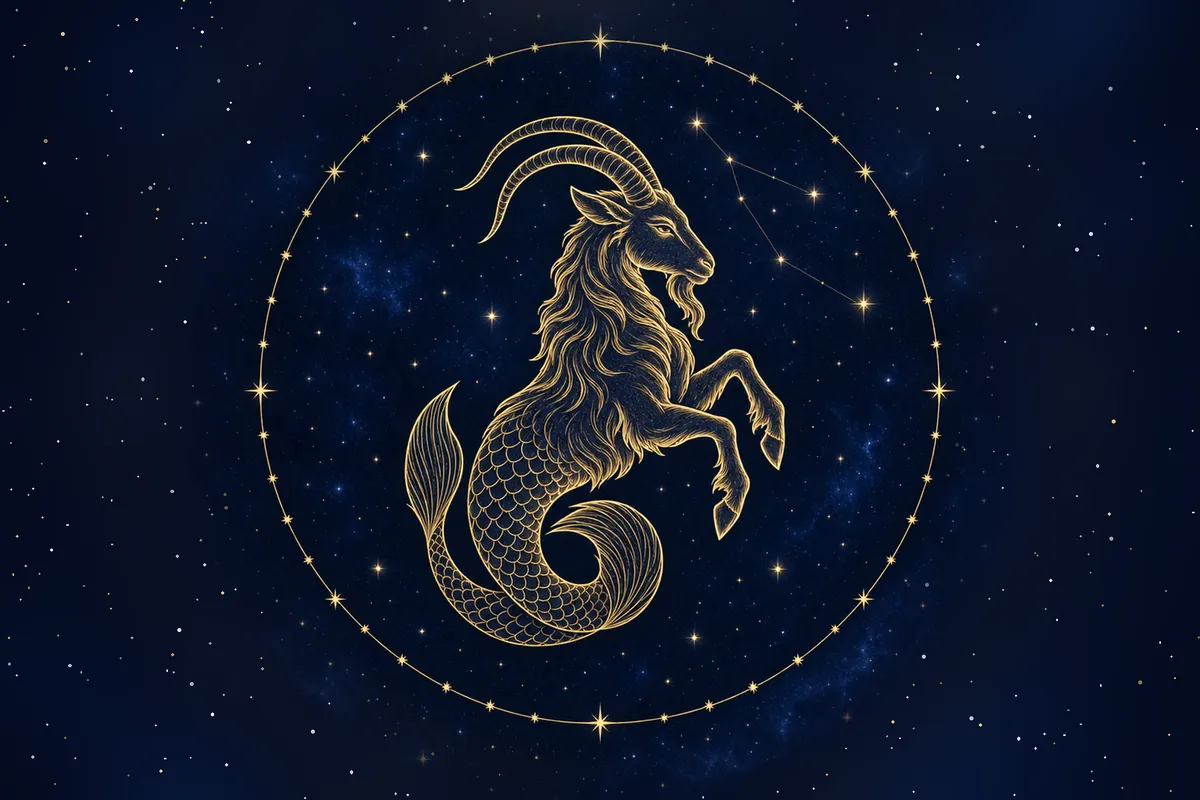
| Symbol | The goat, traditionally the sea-goat (half goat, half fish) |
| Element | Earth |
| Quality | Cardinal |
| Ruling planet | Saturn |
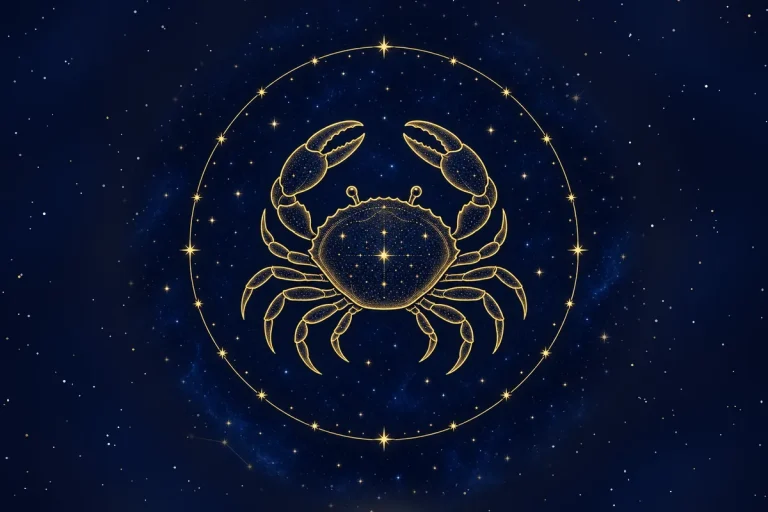
| Opposite sign | Cancer |
| Starstone | Black onyx |
| Color | Brown and most dark colors |
The sign’s symbol is much older than modern horoscope columns. Encyclopaedia Britannica notes that the Babylonians first charted the zodiac sign system around 450 BCE. Britannica’s student encyclopedia adds that when astrology first developed, more than 2,000 years ago, the Northern Hemisphere’s winter solstice fell in the constellation Capricornus. Many writers trace the sea-goat image back further, to Mesopotamian imagery of a goat-fish linked with the god of wisdom and waters.
Sign versus constellation
The sign Capricorn and the star pattern Capricornus no longer line up. Because of precession, the slow wobble of Earth’s axis, the Sun now passes in front of the constellation Capricornus from about January 20 to February 16, using the constellation boundaries the International Astronomical Union adopted in 1928 and published in 1930. Western astrology keeps the older seasonal dates, so a person born on January 1 is still called a Capricorn, even though the Sun sits in front of Sagittarius on that day.
Capricorns as resourceful, determined managers
Astrologers see Capricorns as natural organizers who set high standards for themselves and for others. They try to judge themselves honestly. They respect discipline from those above them and expect it from those below. In their methodical, tough and stubborn way, they push on through personal hardship. They often put family or work ahead of their own needs, and they keep going long after others have given up.
When a project needs practical ability and ambition, this is the sign astrologers point to. Capricorns plan carefully to reach their goals, and those goals often include financial security. They are described as thrifty without being mean, and good at getting strong results with little waste. Their organizing skill lets them handle several projects at once.
Authority, coworkers and mood
Capricorns respect authority, but once they reach a high rank they may stop listening to other opinions on matters they are responsible for. As the person in charge, they expect their staff to be as self-disciplined as they are and to do every task to a high standard. Even so, they are described as fair as well as demanding.
They are not always easy colleagues among equals. They can be reserved and very conservative, they value tradition over new ideas, even good ones, and they can seem humorless. Astrologers also mention a tendency toward pessimism and gloom, especially after a personal failure. The traditional texts describe mood swings in some Capricorns, from high spirits to deep misery. Astrology is not a diagnosis, though. Anyone whose low moods are frequent or hard to shake should talk to a doctor or mental health professional. Quiet habits such as meditation, which older astrology books recommended for this sign, can sit alongside that help but cannot replace it.
Why some Capricorns live up to the word “capricious”
Mood swings are not the only reason some Capricorns earn the word “capricious”, which shares a Latin root with the sign’s name. For quiet, reserved people, they can be suddenly witty and subtle. They also have a habit of spoiling things with sudden, careless bursts of flippancy. In people where this trait is strong, it takes real self-control to hold back. Another surprise is that some Capricorns take an interest in the occult, despite their naturally skeptical minds.
How Capricorns are said to think
Their minds can be very subtle. They think deeply and look at every option before they choose a “safe” one. They are said to have good memories and a strong but methodical appetite for knowledge. They are rational, logical and clear-headed, with good concentration. They enjoy debate, where they can show off their cleverness by leading opponents into traps and defeating them with logic.
Capricorn in relationships
Astrologers often describe Capricorns as ill at ease in personal relationships. They can be somewhat self-centered, though not to an extreme. They are wary around people they do not know well. They prefer not to meddle in other people’s lives and do not want others meddling in theirs, so they can end up with people who do not understand them.
They treat casual acquaintances with diplomacy, tact and, above all, reserve. They make few close friends but are deeply loyal to them, and they can be bitter, powerful enemies. In love they tend to test the water slowly before they commit.
Commitment
The traditional view is that most Capricorns marry for life. Once committed they are described as faithful, though they can be prone to jealousy. This is a character sketch from the astrological tradition, not a promise about any real relationship. Your own choices and circumstances shape how a partnership goes far more than your Sun sign does.
Careers traditionally linked with Capricorn
Astrologers link Capricorn with careers involving math, money, structure and long-term planning, and the older texts add a strong pull toward music. The usual list includes:
- Money and business: economists, financiers, bankers, investors, contractors, managers and real estate brokers.
- Public life: civil servants, especially on long-term projects, and politicians, thanks to their skill in debate and love of argument.
- Education: teachers, and especially school principals, who can manage and organize without too much closeness with staff.
- Hands-on work: practical scientists, engineers, farmers and builders.
- Entertainment: the dry wit some Capricorns have may lead a few into performing.
These lists describe a tradition, not a rule. Any sign can thrive in any field.
Traditional body associations for Capricorn
In medical astrology, an old tradition that assigns each sign a part of the body, Capricorn rules the knees, bones and skin. Older astrology books therefore linked the sign with knee strains, fractures, problems with the legs, skin complaints, and stomach upsets put down to worry or bottled-up feelings. Some historical texts went much further and listed anemia, Bright’s disease (an old name for kidney disease), catarrh, deafness, rheumatism, rickets and even leprosy.
These lists are history and folklore, not medicine. Your birth date does not raise or lower your risk of any illness. For any health concern, see a qualified medical professional.
Likes and dislikes
| Likes | Dislikes |
|---|---|
| Reliability | Wild schemes |
| Professionalism | Fantasies |
| People who know what they are talking about | Dead-end jobs |
| Firm foundations | Public disgrace |
| Purpose | Ridicule |
Common Capricorn problems and possible solutions
Astrologers often frame each sign’s weak spots as strengths that are being held back or overused. The pairs below come from that tradition. Treat them as prompts for reflection rather than guaranteed fixes. If one of them sounds familiar, the suggested change is a reasonable thing to try.
Problem: People take advantage of you and your good nature.
Solution: Be more careful about who you do favors for, and put your own needs first for a change.
Problem: People seem to lose interest in you or back away.
Solution: Look at the causes you have been defending or pushing lately, and choose your battles more wisely.
Problem: Coworkers do not enjoy sharing projects with you.
Solution: You make a good authority figure, but when you work with someone as an equal, try not to act like the boss.
Problem: You get worn out and leave projects unfinished.
Solution: Make fewer plans and space them further apart. Pacing yourself usually clears this up.
What a Capricorn horoscope usually focuses on
Horoscopes change day to day, week to week and month to month, so no single forecast stays accurate for long. What stays the same is the set of themes astrologers keep coming back to for this sign. A Capricorn horoscope usually looks at:
- Career and status: goals, promotions, reputation and long-term plans, since this is the sign astrologers most link with ambition.
- Money and security: budgets, savings and steady progress rather than quick wins.
- Responsibility and limits: duties at home and at work, and the risk of taking on too much.
- Saturn’s movements: as the ruling planet, Saturn’s position and its returns (about every 29.5 years) get close attention.
- Relationships: opening up emotionally and making time for the few people who matter most.
Read any horoscope as a prompt for thinking about your week, not as a forecast of what will happen.
Your ruling planet: Saturn
Capricorn’s ruling planet is Saturn. In astrology, Saturn stands for structure, time, discipline and hard-won lessons, which is why its sign is linked with patience and endurance.

The older version of this page listed Saturn at 18 known moons. That figure is long out of date. NASA counted 293 confirmed moons as of June 2026, more than any other planet, and the number is still growing. The current figures from NASA’s Saturn fact sheet:
| Saturn fact | Value |
|---|---|
| Mean distance from the Sun | 9.537 AU (about 1.4 billion km) |
| Orbital period (one Saturn year) | About 29.45 Earth years |
| Equatorial radius | 60,268 km |
| Polar radius | 54,364 km |
| Rotation period | About 10.66 hours |
| Tilt of equator to orbit | 26.73 degrees |
| Confirmed moons | 293 (as of June 2026) |
More facts about your sign

The goat
The animal shown is the North American mountain goat, a sure-footed climber of the Rocky Mountains and coastal ranges. Despite its name, it is not a true goat of the genus Capra. National Geographic puts adults at roughly 100 to 300 pounds. Alaska’s Department of Fish and Game gives average weights of about 260 pounds for males and 180 for females, with big males reaching about 350. Males stand about four feet at the shoulder and females about three feet.
Its hooves have rough, flexible pads that grip rock, which makes it very agile on steep ground. It has a narrow head and slender black horns that curve backward, usually about 6 to 11 inches long. Both males and females have horns. The coat is white, and a long beard of hair hangs from the chin.
The traditional zodiac symbol is not this animal but the sea-goat, a creature with a goat’s front half and a fish’s tail.
Color
Capricorn’s traditional color is brown, along with most dark colors.

Starstone: black onyx
Onyx is Capricorn’s starstone. It is a form of chalcedony, a microcrystalline quartz, with straight, parallel bands, often black and white. Agate is the same material with curved bands. Onyx has long been carved into cameos, where a figure is cut into the white layer so it stands out against the dark layer below.
When the white layer alternates with another color, the stone gets a different name. With red it is carnelian onyx. With brown it is sardonyx. With the pale grays of common chalcedony, it is called chalcedony onyx.
Solid black onyx that is thick enough to cut is rare in nature. Most black onyx sold today is dyed chalcedony, and trade sources advise assuming a stone has been treated unless a lab report says otherwise. Some jewelry writers argue that all-black material should properly be called black chalcedony.
RE: STARSTONE CONTROVERSY
Starstones are not birthstones
People have argued over “starstones” for a very long time. A starstone, or planet stone, is linked to your zodiac sign or its ruling planet. A birthstone is linked to your birth month. So a Capricorn born in January has garnet as a birthstone, one born in December has turquoise, zircon or tanzanite, and both share onyx as a starstone. Lists differ from book to book. If you want to compare them, long-running astrology references such as Parker’s Astrology by Julia and Derek Parker are a good place to start.
FAQ
What are the exact Capricorn dates?
Capricorn usually runs from about December 22 to January 19. The start and end can move by a day because the Sun reaches each sign at a slightly different time each year. In 2026 the Sun enters Capricorn on December 21 in the Americas, at the December solstice. If you were born near either edge, a birth chart worked out with your exact time and place will show which sign the Sun was in.
Why is Capricorn’s symbol a goat with a fish tail?
The traditional symbol is the sea-goat, a creature with a goat’s upper body and a fish’s tail. Writers often trace it to ancient Mesopotamian imagery linked with the god of wisdom and waters. Many modern pages, including this one, show a land goat for simplicity, but the sea-goat is the classic form.
Is Capricorn an earth sign?
Yes. Capricorn is one of the three earth signs, with Taurus and Virgo, and it is the cardinal earth sign. Astrologers link the earth element with practicality, patience and attention to material security, which fits the traditional picture of Capricorn.
Which planet rules Capricorn?
Saturn rules Capricorn in both traditional and modern Western astrology. Astrologers link Saturn with discipline, time and responsibility. Because Saturn takes about 29.5 years to circle the Sun, the “Saturn return” around ages 29 and 58 is a big theme in Capricorn horoscopes.
Is the Sun really in Capricornus during Capricorn season?
No. Because of precession, the Sun now crosses the constellation Capricornus from about January 20 to February 16, using the boundaries the International Astronomical Union adopted in 1928 and published in 1930. Western astrology keeps the older seasonal dates, so signs and constellations are now about a month apart.
Is astrology a science?
No. Astronomy is the science of stars and planets. Astrology is a cultural tradition, thousands of years old, that people use for reflection, conversation and fun. Sign descriptions can be a useful prompt for thinking about yourself, but they should not guide medical, financial, legal or relationship decisions.
Sources
- NASA Space Science Data Coordinated Archive: Saturn Fact Sheet
- NASA Science: Astronomy Picture of the Day, “Six Moons of Saturn” (August 11, 2026)
- NASA Space Place: How Many Moons Does Each Planet Have?
- Encyclopaedia Britannica: Capricorn (astrology)
- Britannica Kids: Capricornus
- Britannica: Uncover the history of the zodiac
- EarthSky: Dates of the Sun’s entry into each constellation of the zodiac
- Royal Museums Greenwich: Winter solstice
- National Geographic: Mountain goat
- Alaska Department of Fish and Game: Mountain goat
- International Gem Society: Black onyx jewelry and gemstone information
- The Old Farmer’s Almanac: Capricorn zodiac sign
- Julia and Derek Parker, Parker’s Astrology