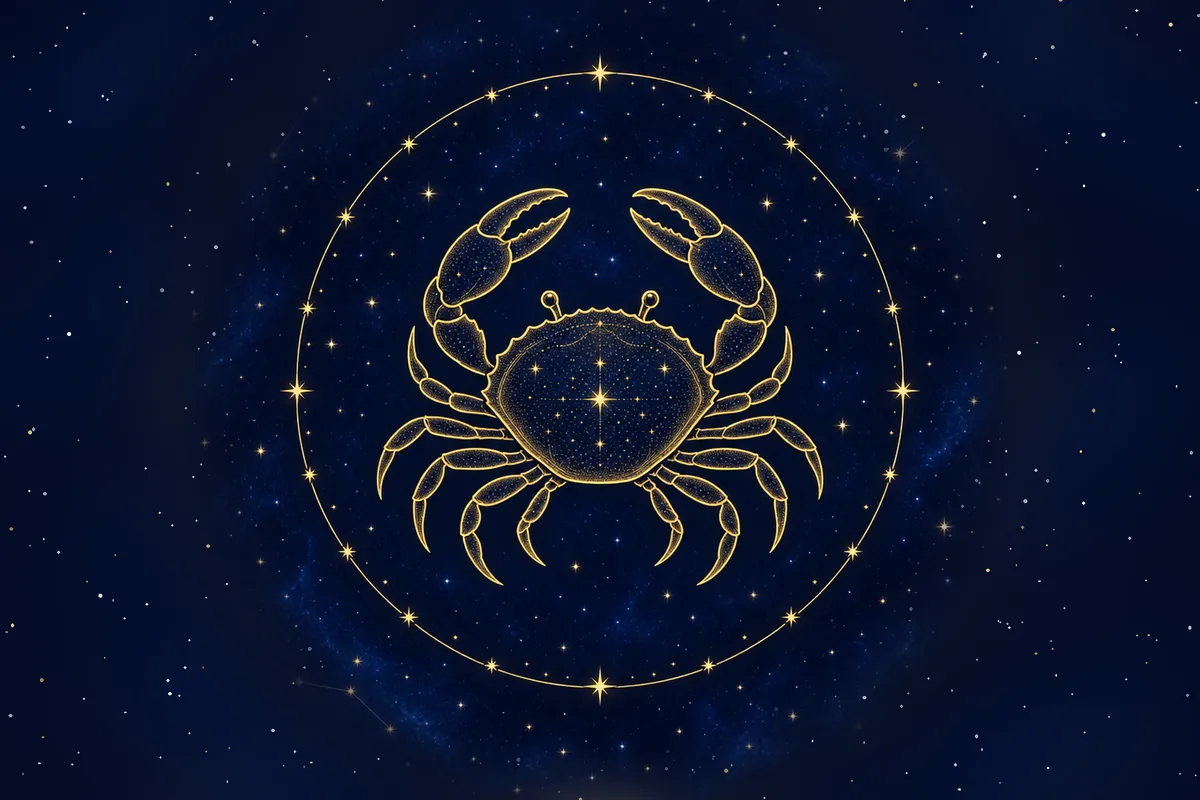
Cancer is the fourth sign of the zodiac. It covers people born from about June 21 to July 22, and its symbol is the Crab. The start and end dates can move by a day in some years, depending on when the Sun reaches the June solstice, so some references begin the sign on June 22. In astrology tradition Cancer is a water sign ruled by the Moon, and it stands for home, family, memory, loyalty and a protective, sensitive temperament. People read about it for reflection and fun. It is not a science.
Cancer at a glance
The basic facts below are the ones most astrology references agree on. They also show where the astrological sign differs from the star pattern of the same name.
| Feature | Cancer |
|---|---|
| Usual dates (tropical zodiac) | About June 21 to July 22 (sometimes given as June 22 to July 22) |
| Position in the zodiac | Fourth sign, after Gemini and before Leo |
| Symbol | The Crab (♋), linked to Karkinos, the giant crab in Greek myth |
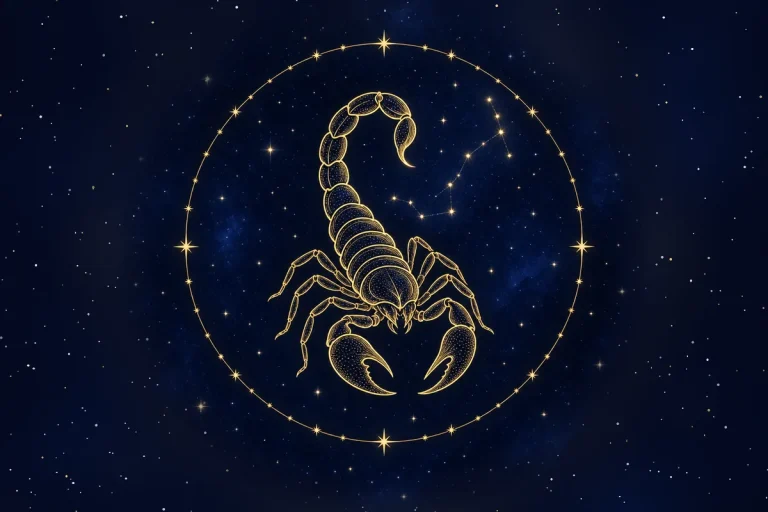
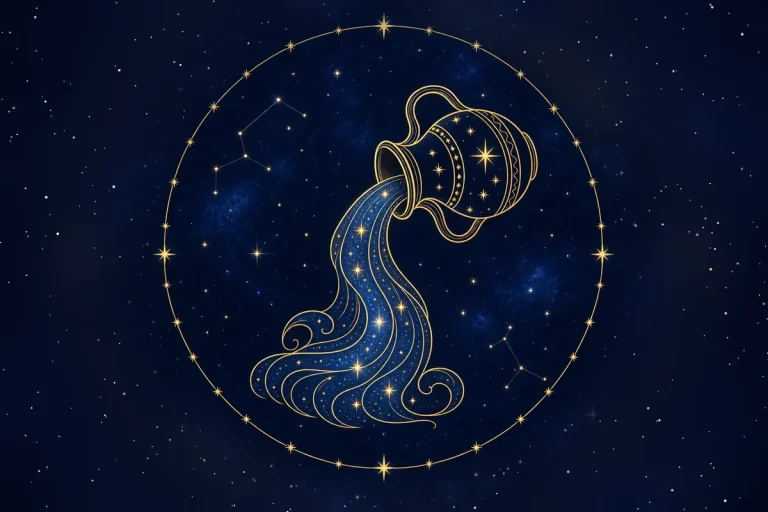
| Element | Water (shared with Scorpio and Pisces) |
| Modality | Cardinal (shared with Aries, Libra and Capricorn) |
| Ruling planet | The Moon |
| Opposite sign | Capricorn |
| Sun in the constellation Cancer (astronomy) | Roughly July 20 or 21 to August 10 or 11 |
Astrological signs and astronomical constellations are not the same thing. Western astrology uses the tropical zodiac, which is fixed to the solstices and equinoxes. Because of a slow wobble in Earth’s axis called precession, the Sun now spends most of “Cancer season” in front of the stars of Gemini. EarthSky’s tables, which use the constellation boundaries the International Astronomical Union set in the 1930s, show the Sun entering the constellation Cancer around July 20 or 21 and moving into Leo around August 10 or 11. NASA did not change anyone’s sign. Astronomers have simply always measured the sky differently from astrologers.
About the Cancer sign
In traditional writing, the Cancer character is the hardest of the twelve signs to pin down. Descriptions of it run from timid, shy and withdrawn all the way to brilliant, and famous people born under Cancer turn up in almost every field. At its core, the sign is described as conservative and home-loving. It values a safe base to retreat to when life gets stressful.
Older astrology books split this along gender lines. They said the Cancer man wants a refuge and the Cancer woman has strong maternal instincts and likes a large family. Modern astrologers describe the same nurturing, protective streak in people of any gender, and treat family size as a personal choice, not a star sign trait.
“Nest-like” is the word astrologers often use for the Cancer home. The tradition pictures a cosy, private, slightly den-like house that belongs to the family, not a showcase for visitors. That does not make Cancer unsociable. The sign is said to have a time for company and a time for solitude, and this is part of the apparent contradiction in its nature.
The outer shell and the soft centre
Like the crab, Cancer is described as having a hard shell and a soft interior. On the outside, people born under the sign can seem formidable: thick-skinned, unemotional, uncompromising, stubbornly tenacious, energetic, shrewd and intuitive, sometimes with real depth of thought. People close to them often see someone quite different, with a kind and sympathetic sensitivity, especially toward the people they love.
Their keen imagination helps them put themselves in other people’s shoes. Traditional texts also warn that this imagination can tip into fantasy, with some Cancerians trying to shape their lives around a romantic ideal.
Creativity, drama and the unseen
Cancer is linked with a love of art and literature, and especially drama, where the rise and fall of action and feeling is said to excite them. The tradition credits many Cancerians with literary, artistic or speaking talent. A good ear and a gift for mimicry can suit the stage, although their emotional intensity may lead them to overact.
Because they seem so down to earth, it surprises people that Cancerians are often described as fascinated by the occult and mystical ideas. In the most hopeful version of the portrait, a Cancer who balances the urge to reach out with the urge to withdraw can inspire others, especially young people, through their idealism. Older books suggested leading a youth organisation as a natural fit.
Cancer in personal relationships
In relationships, astrology describes Cancer as a mix of toughness and softness. In fantasy they can be romantic to the point of sentimentality. In real life and long-term partnerships, their love is described as less sentimental and more steadily loyal.
Older texts claimed that Cancerians might stray while still putting their partner and family first. That is a stereotype from the books, not something a birth date can tell you about any individual. The more common modern reading is that Cancer sees itself as the protector of its family and close circle.
- Giving freely. Cancer is said to love without holding back, giving a lot and asking for little. A lesson the tradition often names for the sign is learning to receive gracefully.
- Easily swayed. They can be too easily influenced by the people they love and admire, and by the mood of the moment.
- Loyal friends. Their loyalty is a strength. The downside, in the traditional picture, is clannishness: an “us against the world” attitude and coolness or suspicion toward outsiders.
Cancer compatibility in brief
Traditional sign matching usually pairs Cancer with the other water signs, Scorpio and Pisces, because they share a feeling-first outlook. Earth signs such as Taurus and Virgo are also seen as good matches, since they offer the stability Cancer is said to want. Capricorn, the opposite sign, is described as a pairing that is both attractive and challenging, because each has what the other lacks. Sun signs are only one small part of astrological compatibility, and none of these pairings predicts how a real relationship will go.
Memory and the pull of the past
Cancer is described as having a retentive memory, especially for emotionally charged events. Cancerians can supposedly recall these in detail years later. The tradition says childhood memories shape them strongly.
Because they are said to live in the past through memory and in the future through imagination, astrologers often give this example. If a Cancer meets an old unrequited love by chance, the old feeling can come rushing back, even if they believed they had moved on long ago.
Traditional weak points
Astrology texts list many possible faults for Cancer. Here they are as the tradition describes them, not as a judgement on anyone born in late June or July:
- Untidiness, sulking, moodiness and self-pity, sometimes linked to feeling inferior
- Brooding over insults, many of them imagined, while still being easily flattered
- Tactlessness, mixed with a habit of following majority opinion to get ahead
- Changing opinions, loyalties and even jobs often, which can look like a lack of stability
- A romantic streak that makes them passionate supporters of causes, such as a sports team whose heroes they identify with
Some older books went further and called Cancerians “easily corrupted”, even suggesting they could make convincing con artists because they romanticise so well. That reflects the harsh moralising style of mid-20th-century astrology writing more than anything modern astrologers stand behind.
Careers traditionally linked to Cancer
Astrology links Cancer with a wide range of work, especially jobs that involve caring for people, understanding what others think, or protecting something valuable.
| Area | Why astrology links it to Cancer | Examples from the tradition |
|---|---|---|
| Media and public life | Interest in what people think, and a sense of what they can be told | Journalist, writer, behind-the-scenes political work |
| Care and service | Protective, nurturing instincts | Welfare work, nursing, social services |
| Food and home | Love of comfort and good living | Chef, caterer, housekeeper, hospitality |
| Business | Organising skill, a sense of value and thrift, some inventiveness | Trade, management, running a company |
| Discovery and collecting | The romance of finding forgotten treasures | Antiques dealer, second-hand trade, collector |
| Home and water | Links to the home and to the sea | Real estate, gardening, sailing |
In politics, older texts said Cancerians were more likely to work in the background than hold top positions of power, and might even switch parties. Like every career suggestion in astrology, this is a talking point for reflection, not career advice.
Traditional physical descriptions
Older astrology books described a “typical” Cancer body. They gave average or below-average height, a fleshy build, short legs, brown hair, a round face, a pale complexion, a prominent forehead, small blue or gray eyes, a short or upturned nose, a full mouth and sometimes a clumsy walk. These descriptions are a historical curiosity. Appearance comes from genetics, environment and many other factors, not from the time of year someone was born.
Cancer and the body in traditional astrology
In medical astrology, a very old tradition that goes back to Greek and Roman writers, each sign is linked to parts of the body. Cancer is linked to the chest and breasts, the stomach and digestion, and in older texts also the elbows and the womb. These links are symbolic. They are not medical facts.
Where the disease name really comes from
The word “cancer” for the disease does not come from the zodiac sign. Around 400 BC, the Greek physician Hippocrates used the Greek word karkinos, meaning crab, for certain growths. Historians suggest two reasons: the swollen veins around a tumour looked like a crab’s legs, or a crab’s grip, which is hard to break, matched how difficult tumours were to remove. Latin-speaking physicians later translated this as cancer, the Latin word for crab. In the 2nd century AD, Galen used oncos for swellings in general, the root of the modern word “oncology”. The disease and the star sign share a name because both refer to the same animal.
Older astrology pages also claimed that Cancerians were especially prone to breast cancer, pleurisy, dropsy (now called oedema), piles, varicose veins, stomach problems, coughs and weak eyesight. No medical evidence supports any link between birth date and these conditions. If you have health concerns, talk to a doctor. A horoscope cannot replace one.
Likes and dislikes
Astrology writers often sum up Cancer with a short list of preferences. Treat it as a light-hearted sketch.
- Likes
- Hobbies
- Romance
- Children
- Home and country
-
Gatherings with people they trust
-
Dislikes
- Tense, aggravating situations
- Failure
- Opposition
- Being told what to do
- Unasked-for advice, good or bad
Common Cancer challenges and ways to reflect on them
Astrologers often frame each sign’s weak points as strengths that are being blocked or overused. The idea is that when a trait is held back or unrecognised, it tends to come out in a less helpful form. The traditional Cancer “problems” below are best read as prompts for self-reflection. They are not diagnoses, and no result is guaranteed.
Challenge: You can be oversensitive and clingy, which may lead you to hold on to hurts and slights that were never intended. This can cause tension with a partner.
Reflection: Ask whether what you are expressing is love, or a need to hold on to someone for reassurance. If clinginess or anxiety in relationships keeps causing you distress, a qualified counsellor or therapist can help in a way a horoscope cannot.
Challenge: Next to neediness, a classic Cancer flaw is getting so wrapped up in your own feelings that you miss what others are doing and achieving. You might feel left out, or jealous, when a family member does better than you.
Reflection: Make a deliberate effort to celebrate other people’s good news. Over time it can become a habit, and both you and they are likely to feel better for it.
Challenge: Taking orders without getting angry or upset can be hard for you. This matters, because walking away from every job where you feel picked on can hurt your income and your family’s security.
Reflection: Watch how long-serving colleagues handle the boss and the team, and learn from what works. Choosing your battles, and sometimes simply following reasonable instructions, often earns more goodwill than resisting them.
What a Cancer horoscope usually focuses on
Daily, weekly and monthly horoscopes change all the time, and any forecast is tied to the date it was written. Read them as prompts for reflection, not predictions. Even so, Cancer horoscopes tend to come back to the same themes, because astrologers build them from the sign’s core symbolism.
- The Moon. Cancer is the only sign ruled by the Moon, so astrologers pay close attention to new and full moons, eclipses and the Moon’s monthly cycle when writing for this sign. Emotional ups and downs are a constant theme.
- Home and family. Cancer is linked to the fourth house of the birth chart, which covers home, roots, parents and private life. Moving house, family news and domestic projects come up often.
- Emotional security. Forecasts often look at what makes Cancer feel safe: close relationships, trusted friends and a stable base.
- Money as security. Because of its thrifty, protective reputation, Cancer readings tend to frame money in terms of savings and safety rather than risk.
- Cancer season. The weeks around Cancerians’ birthdays, from about June 21 to July 22, are treated as a time for personal fresh starts. Planetary movements through Cancer and Capricorn, its opposite sign, get extra attention.
A single Sun sign forecast is the broadest form of astrology. Astrologers who work with full birth charts also consider the Moon sign, the rising sign and planetary positions at the exact time and place of birth. Two Cancer readers can therefore get very different chart readings.
A short history of the Crab
The zodiac traces back to Babylonian astronomers, whose omen texts are the earliest recorded organised system of astrology. Encyclopaedia Britannica dates the Babylonian use of planetary omens to forecast individual lives to around the 3rd century BC, perhaps a little earlier. In Hellenistic Egypt, Babylonian ideas mixed with Egyptian traditions to form horoscopic astrology. Ptolemy’s Tetrabiblos, written in the 2nd century AD, became a founding text of Western astrology and set down many of the sign associations still in use.
The Crab’s mythology comes from Greece. In the story of Heracles’ labours, the goddess Hera sent the giant crab Karkinos to distract him while he fought the Hydra. Heracles crushed it, and Hera placed it among the stars. The constellation Cancer is the faintest of the zodiac constellations. Its best-known feature is the Beehive Cluster, also called Praesepe or M44.
FAQ
What are the dates for Cancer?
Cancer usually runs from about June 21 to July 22. The exact start depends on the moment of the June solstice, so in some years and some references the sign begins on June 22, or ends a day earlier or later. If you were born on a boundary date, a birth chart based on your exact time and place of birth will show which sign the Sun was in.
What element and planet rule Cancer?
Cancer is a water sign, together with Scorpio and Pisces, and a cardinal sign, which astrologers link to starting things. Its ruling planet is the Moon. That is why Cancer is so strongly tied to feelings, moods, memory and home.
Did NASA change the Cancer zodiac dates?
No. NASA has explained that the Sun’s path crosses 13 constellations, including Ophiuchus, and that the dates the Sun spends in front of each constellation differ from astrological sign dates. That is astronomy. Western astrology still uses the tropical zodiac, so Cancer’s sign dates stay at about June 21 to July 22.
Which signs are most compatible with Cancer?
Traditional astrology usually names the water signs Scorpio and Pisces, and the earth signs Taurus and Virgo, as the best matches for Cancer. Capricorn, the opposite sign, is seen as a strong but demanding pairing. Sun sign compatibility is a broad generalisation and cannot tell you whether any real relationship will work.
Is the disease cancer named after the zodiac sign?
No. Both names come from the crab. The Greek physician Hippocrates used karkinos, meaning crab, for certain tumours around 400 BC, and Latin writers later translated it as cancer. The zodiac sign has no medical connection to the disease.
Is astrology scientifically accurate?
Astrology is a cultural and symbolic tradition, not a science. Controlled studies have not found that Sun signs predict personality, health or life events. Many people still enjoy horoscopes as a way to reflect on their lives, and that is the spirit in which to read them.
Sources
- NASA Space Place: Star Finder and the zodiac constellations (archived)
- EarthSky: Dates of the Sun’s entry into each constellation of the zodiac
- Encyclopaedia Britannica: Cancer (astrology)
- Encyclopaedia Britannica: Cancer constellation
- Encyclopaedia Britannica: Astrology in the Hellenistic period
- National Cancer Institute SEER Training: Cancer, a historic perspective
- Almanac.com (The Old Farmer’s Almanac): Cancer zodiac sign
- Farmers’ Almanac: Cancer zodiac sign dates, symbol, traits and constellation